Master off-grid RV living with smart boondocking power solutions. Learn how to use solar, batteries, and generators to stay comfortable anywhere you camp.
Introduction
Boondocking — also called “dry camping” — means freedom.
No hookups, no crowds, just you, your rig, and the open road.
But that freedom comes with one big challenge: power.
How do you keep your lights on, fridge cold, and devices charged when you’re miles from the nearest outlet?
This guide will show you the smartest and most affordable ways to power your RV off-grid, so you can stay longer, live better, and enjoy true independence.
🌞 1. Know Your Power Needs Before You Go
The key to lasting off-grid is knowing how much power you use.
Calculate Your Daily Power Use:
- List all devices and appliances.
- Note their wattage (from labels or manuals).
- Multiply by hours of daily use.
- Add them up for your total daily watts.
💬 Example:
TV (100W × 2 hrs) = 200W
Fridge (150W × 8 hrs) = 1,200W
Lights (50W × 4 hrs) = 200W
Total = 1,600W/day
💬 Pro Tip: Track usage for a week — you’ll be surprised how much small devices add up.
🔋 2. Build the Right Battery Bank
Your batteries are your power storage tank — the bigger and better they are, the longer you can boondock.
Battery Types:
- Flooded Lead-Acid (FLA): Inexpensive but needs maintenance.
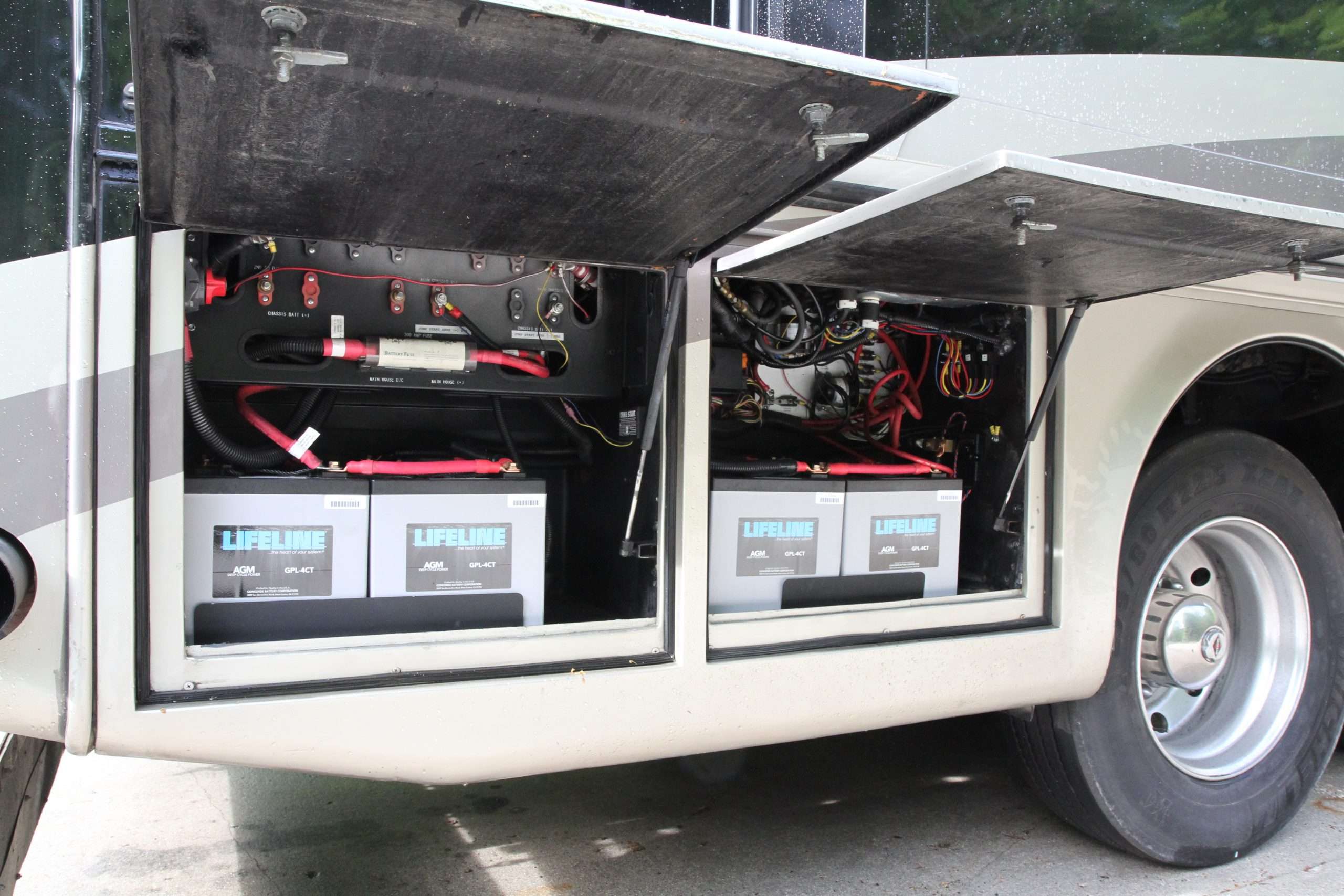
- AGM: Sealed, durable, great mid-range choice.
- Lithium (LiFePO4): Long-lasting, lightweight, best for full-timers.
Battery Sizing Tip:
To last 2–3 days off-grid, you’ll want at least 200Ah (amp hours) of usable battery capacity.
💬 Pro Tip: Add a battery monitor to track remaining charge — it’s more accurate than guessing.
📘 Related: RV Battery Maintenance: Keep Your Power System Healthy
⚡ 3. Solar Power: Silent, Clean, and Reliable
Solar power is the ultimate freedom tool for boondockers.
Basic Solar Setup Includes:
- Solar Panels: Capture sunlight (200–400W ideal for small rigs).
- Charge Controller: Regulates power going into batteries.
- Battery Bank: Stores energy.
- Inverter: Converts DC battery power into AC for outlets.
💬 Pro Tip: Tilt panels toward the sun for 20–30% more efficiency.
Portable vs Roof-Mounted Panels:
| Type | Pros | Cons |
|---|---|---|
| Roof-Mounted | Always charging, no setup | Limited to parked angle |
| Portable | Aim at sun, easy to expand | Must set up each time |
🔌 4. Generators: The Backup Power Hero
Even with solar, you’ll sometimes need backup — cloudy days, heavy appliance use, or winter months.
Generator Tips:
- Choose quiet inverter generators (like Honda or Champion).
- Size for at least 3,000 watts for comfort.
- Run only during needed hours to conserve fuel.
- Always use outdoors and downwind from your RV.
💬 Budget Hack: Use your generator 1–2 hours daily to recharge batteries instead of running full-time.
📘 Related: RV Tool Kit Essentials: What Every RVer Should Carry
🪫 5. Hybrid Power Strategy = Best of Both Worlds
The best setup combines solar + battery + generator.
Why It Works:
- Solar handles daily use.
- Batteries store energy for night.
- Generator tops off when needed.
💬 Pro Tip: Automate the process with a smart charger — it prioritizes solar, then generator power.
🧠 6. Reduce Power Use with Smart Habits
Even a big battery bank won’t help if you waste power.
Energy-Saving Hacks:
- Switch to LED lights (use 80% less power).
- Use 12V appliances instead of AC when possible.
- Run major devices (microwave, coffee maker) during solar peak hours.
- Charge electronics during generator runs.
- Unplug anything with a standby light — it’s always drawing power.
💬 Mindset Tip: Think like a sailor — every watt counts when you’re off-grid.
🧯 7. Safety First: Electrical Precautions Off-Grid
Always Check:
- Proper wire size for your setup.
- Fuses or breakers rated correctly.
- Ventilation around batteries (especially lead-acid).
- No loose or corroded connections.
💬 Pro Tip: Use battery terminal protectant spray to avoid corrosion and ensure solid power flow.
🧰 8. Must-Have Gear for Boondocking Power
| Item | Purpose |
|---|---|
| Solar panels | Primary energy source |
| Generator | Backup charging |
| Inverter | Converts battery power to AC |
| Charge controller | Regulates solar input |
| Battery monitor | Tracks charge levels |
| Heavy gauge cables | Safe power transfer |
| Surge protector | Prevents voltage spikes |
💬 Budget Tip: Start small — even a 100W panel + AGM battery setup beats running your generator nonstop.
🌎 9. Eco-Friendly Boondocking Power Tips
- Position your rig to maximize solar exposure.
- Use shade only during high heat to reduce A/C use.
- Turn off outdoor lights at night to preserve batteries and stargazing.
- Recycle old batteries properly — never toss them.
💬 Bonus Tip: Keep your solar panels clean — dust can reduce efficiency by up to 25%.
🕒 10. Plan for the Long Haul
Boondocking comfort is all about balance — enough power, not too much hassle.
Checklist Before You Camp:
- Fully charge batteries.
- Test solar and generator output.
- Pack spare fuel, fuses, and extension cords.
- Keep a log of daily power usage — it helps you plan future trips better.
💬 Pro Tip: After each trip, note what worked (and what didn’t). It’s the fastest way to master your off-grid setup.
Bonus: 3 Sample Boondocking Power Setups
| Setup Type | Ideal For | Components |
|---|---|---|
| Basic Budget Setup | Weekend campers | 100W solar, 100Ah battery, small generator |
| Mid-Level Setup | Frequent boondockers | 300W solar, 200Ah battery, inverter, charge controller |
| Full-Time Setup | Off-grid pros | 600W+ solar, 400Ah lithium, generator backup |
Conclusion
Boondocking power isn’t about giving up comfort — it’s about freedom through preparation.
When your RV’s power system works for you, you can camp longer, explore farther, and truly live on your own terms.
💬 With the right setup, the road is your only limit.
Coming Soon:
🌞 Free RV Boondocking Power Planner — launching January 1, 2026!
Includes:
- Solar system sizing guide
- Battery capacity calculator
- Generator runtime log
- Power usage worksheet
📩 Sign up now for early access and other free RV living tools.
Tags:
RV boondocking power, off-grid RV living, RV solar setup, RV generator, battery power for RVs, full-time RV living, RVBudget.com
\ Get the latest news /

Related Posts
25 RV Living Must-Haves: Essentials for Comfort, Safety, and Freedom on the Road
Discover 25 RV living must-haves for comfort, safety, and convenience.…
How to Winterize Your RV the Right Way: A Complete Step-by-Step Guide
Protect your RV from freeze damage with this complete step-by-step…
RV Battery Maintenance and Replacement Guide: How to Check, Change, and Buy the Right RV Batteries for Long-Lasting Power
Learn everything about RV battery maintenance, replacement, and buying the…