Learn how to set up your RV for the first time like a pro. Step-by-step instructions for leveling, hookups, safety checks, and first-night comfort.
Introduction
You’ve finally done it — you bought your RV, picked your destination, and hit the open road.
Exciting? Absolutely.
Overwhelming? Maybe a little.
Your first RV setup can feel intimidating — water hookups, power cords, leveling blocks, slides, stabilizers, and those mysterious valves. But don’t worry — every seasoned RVer started right where you are now.
This complete beginner’s guide walks you step-by-step through how to set up your RV for the first time, including what to check, what to avoid, and how to make your first night a stress-free success.
💬 Because a confident first setup sets the tone for every adventure ahead.
🗺️ 1. Before You Arrive: Pre-Trip Preparation
Preparation begins before you even pull into the campground.
Pre-Trip Checklist:
- Confirm your reservation and site size.
- Double-check RV height, length, and power type (30A or 50A).
- Fill fresh water if you’ll be boondocking.
- Empty gray and black tanks.
- Secure loose interior items (nothing should slide or fall).
💬 Pro Tip: Call the campground if you’re unsure about roads, clearance, or parking direction — not all sites are the same.
🚐 2. Arriving at Your Campsite
Once you find your assigned spot, take it slow.
Steps:
- Stop before backing in. Walk the site to check for low branches, rocks, and hookups.
- Identify water, sewer, and electrical posts.
- Decide which direction gives you the easiest access to hookups and best view.
💬 Parking Tip: Back in slowly with a spotter or use a rear-view camera. Never rush — scratches and bent jacks are first-timer trademarks.
🪵 3. Leveling Your RV
A level RV isn’t just about comfort — it’s about safety and function.
Fridges won’t cool correctly, slides may jam, and doors swing open if the rig isn’t level.
How to Level:
- Park roughly where you want.
- Use a small bubble level (or built-in sensor) to check both side-to-side and front-to-back.
- Add leveling blocks under tires until balanced.
- Set parking brake (for motorhomes) or chock wheels (for towables).
💬 Pro Tip: Always level side-to-side before unhooking or lowering jacks.
⚙️ 4. Unhitching (for Travel Trailers and Fifth Wheels)
Unhitching safely prevents roll or drop hazards.
Steps:
- Chock the trailer wheels.
- Lower the tongue jack or landing gear until weight is off the hitch.
- Unlock the latch and slowly drive the tow vehicle forward.
- Raise or lower the tongue to level the trailer front-to-back.
💬 Safety Note: Never unhook on a slope without wheel chocks firmly in place.
🔩 5. Deploying Stabilizers and Slides
Once leveled, you can stabilize and expand your space.
Stabilizers:
- Lower all four stabilizer jacks snugly to the ground.
- Avoid over-tightening — they’re for balance, not lifting weight.
Slides:
- Make sure nothing blocks inside or outside slide space.
- Extend slides fully using your control panel or remote.
💬 Pro Tip: Always deploy slides after leveling, never before.
🔌 6. Connecting to Shore Power
Electricity first — your rig needs it for lights, fridge, and A/C.
Steps:
- Verify pedestal voltage (use a surge protector or EMS).
- Turn pedestal breaker OFF.
- Plug in your power cord securely.
- Turn breaker ON.
💬 Pro Tip: Always use a surge protector — campground power can fluctuate dangerously.
💧 7. Hooking Up Water
Fresh, clean water is essential, and there’s a right (and safe) way to connect.
You’ll Need:
- Drinking-water-safe hose (white or blue)
- Water pressure regulator
- Inline filter
Steps:
- Attach regulator and filter to the spigot.
- Connect hose to your “City Water Inlet.”
- Turn on the water slowly and check for leaks.
💬 Tip: If boondocking, fill your fresh-water tank before travel instead.
🚰 8. Hooking Up Sewer (The Clean Way)
Not glamorous — but absolutely necessary.
You’ll Need:
- Heavy-duty sewer hose (20+ ft)
- Sewer elbow fitting
- Gloves
Steps:
- Attach hose securely to RV outlet and sewer drain.
- Keep black valve closed until tank is full — prevents waste buildup.
- Empty black, then gray.
- Rinse hose and cap ends tightly.
💬 Pro Tip: Store your sewer gear in a separate bin labeled “Dirty Side.”
🌡️ 9. Setting Up Propane and Appliances
If you have propane appliances (fridge, stove, furnace), check your system before lighting.
Steps:
- Open propane valves slowly.
- Light one stove burner to clear air from lines.
- Verify fridge or water heater ignites normally.
💬 Safety Tip: Keep a small spray bottle of soapy water to check for leaks — bubbles = leak.
🧠 10. Test All Systems
Before settling in, run a full check of your rig.
✅ Lights and fans
✅ Water pump and heater
✅ Fridge and A/C
✅ Smoke, CO₂, and propane detectors
💬 Pro Tip: Test everything while connected to shore power and again on battery backup.
🪟 11. Adjust and Secure Awnings
Awnings provide shade but can tear or flip in strong wind.
Set Up Safely:
- Extend slowly and evenly.
- Adjust pitch for rain runoff.
- Retract during storms or when leaving camp.
💬 Upgrade Idea: Add LED lights or shade panels for cozy evenings.
🧯 12. Review Fire and Safety Equipment
Before you relax, double-check safety gear.
Essentials:
- Fire extinguishers (1 near door, 1 near kitchen)
- Smoke and propane detectors
- First-aid kit
- Emergency exits (windows work!)
💬 Pro Tip: Familiarize everyone onboard with exits and extinguisher use.
🛋️ 13. Organize Your Interior
Unpack strategically — every inch matters.
Smart Tips:
- Store heavy items low, light items high.
- Use bins and dividers.
- Label drawers by category.
💬 Design Hack: Use non-slip shelf liners to stop rattling while driving.
🌅 14. Set Up Outdoor Living Space
Turn your site into a relaxing retreat.
Ideas:
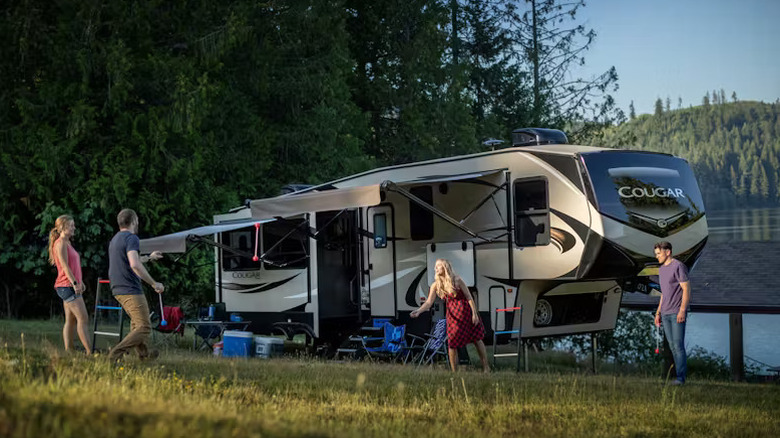
- Lay out an outdoor rug
- Set up foldable chairs and table
- Hang string lights or solar lanterns
- Add a small grill or firepit (if allowed)
💬 Bonus Tip: Position chairs facing sunrise or sunset for perfect coffee or wine hours.
🔦 15. Get to Know Your Neighbors (and Campground Rules)
Campground etiquette makes everyone’s stay better.
Good Manners:
- Keep noise low after 10 PM.
- Don’t cut through other campsites.
- Leash pets and clean up after them.
- Wave hello — RV life runs on kindness.
💬 Community Tip: Experienced neighbors often love helping first-timers.
📋 16. Create a Setup and Teardown Checklist
Even pros forget things.
A printed list keeps your process consistent and stress-free.
Include:
- Slides
- Antenna
- Jacks
- Power/water/sewer
- Doors and storage
💬 Pro Tip: Laminate your list and hang it near the door.
🪠 17. Manage Waste Responsibly
Your tanks fill faster than you think.
Best Practices:
- Dump only at approved stations.
- Use RV-safe toilet paper.
- Add tank treatment monthly.
💬 Tip: Keep a small spray bottle of vinegar for odor control — chemical-free and cheap.
🧭 18. Test All Interior Systems Overnight
Your first night is a trial run.
Test:
- Does the fridge stay cold?
- Do water and drains run smoothly?
- Are any fuses tripping?
💬 Pro Tip: Keep a flashlight handy for late-night troubleshooting.
🧴 19. Learn to Conserve
Campground utilities aren’t unlimited.
Conserve Smartly:
- Turn off water between rinses.
- Switch lights to LED.
- Cook with propane when on battery.
💬 Budget Tip: The less you use, the longer you can boondock.
🪞 20. Expect Small Problems (and Fix Them Calmly)
Leaks, fuses, and stuck doors happen — even to new rigs.
Keep Onboard:
- Tool kit
- Spare fuses and bulbs
- Sealant tape
- Multi-bit screwdriver
💬 Mindset: Every fix you learn builds confidence and saves money.
🔒 21. Secure the Site When Leaving
Before heading out:
✅ Retract awning
✅ Unplug shore power
✅ Close windows
✅ Lock compartments
✅ Shut off propane
💬 Pro Tip: Do a slow 360° walkaround before pulling away.
🧠 22. Practice Your Setup Routine
The more you do it, the faster and smoother it gets.
Make it a sequence and keep tasks consistent every time.
💬 Routine Tip: The goal is confidence — not speed.
🌦️ 23. Plan for Bad Weather
Storms can strike anytime.
Know where your rig’s weakest points are (awnings, vents, slide seals).
💬 Storm Prep: Keep weather alerts on and retract awnings early.
🧾 24. Keep a Logbook
Write down what worked, what didn’t, and what to pack next time.
Track:
- Miles driven
- Campsite reviews
- Setup times
- Maintenance reminders
💬 Tip: Future-you will thank you for those notes.
🌄 25. Relax — You’ve Earned It
The first setup is the hardest — after that, it becomes second nature.
Now it’s time to sit under your awning, breathe in the view, and enjoy your new home on wheels.
💬 Because RV life isn’t just about destinations — it’s about freedom that starts the moment you plug in.
Conclusion
Setting up your RV for the first time doesn’t have to be stressful.
With patience, preparation, and a little practice, you’ll master your setup routine and hit the road with confidence.
💬 Because every great RV adventure begins with one smooth setup.
Coming Soon on RVBudget.com
“RV Hookups Made Easy: How to Master Water, Sewer, and Power Like a Pro”
Includes:
- Printable setup checklist
- Hookup diagrams
- Common first-timer mistakes
📩 Join our newsletter for free guides, printable planners, and exclusive RV living tools.
Tags
setting up your rv for the first time, first rv setup, rv hookups guide, rv beginner checklist, rv camping setup, rv leveling tips, rv campsite setup, rv life for beginners, rv living basics, rvbudget.com setup guides
\ Get the latest news /

Related Posts

RV Cooking and Meal Planning: 25 Delicious Ways to Eat Well on the Road
Discover 25 RV cooking and meal-planning ideas to save time,…
Title: Understanding Fixed and Variable Costs in RV Living
Learn how to manage your RV living expenses by understanding…
RV Safety Essentials: Proven Tips for Fire, Propane, and Emergency Preparedness
Stay safe on the road and at the campground. Learn…